Saved by Beauty: What Mary Oliver Teaches Us About Paying Attention
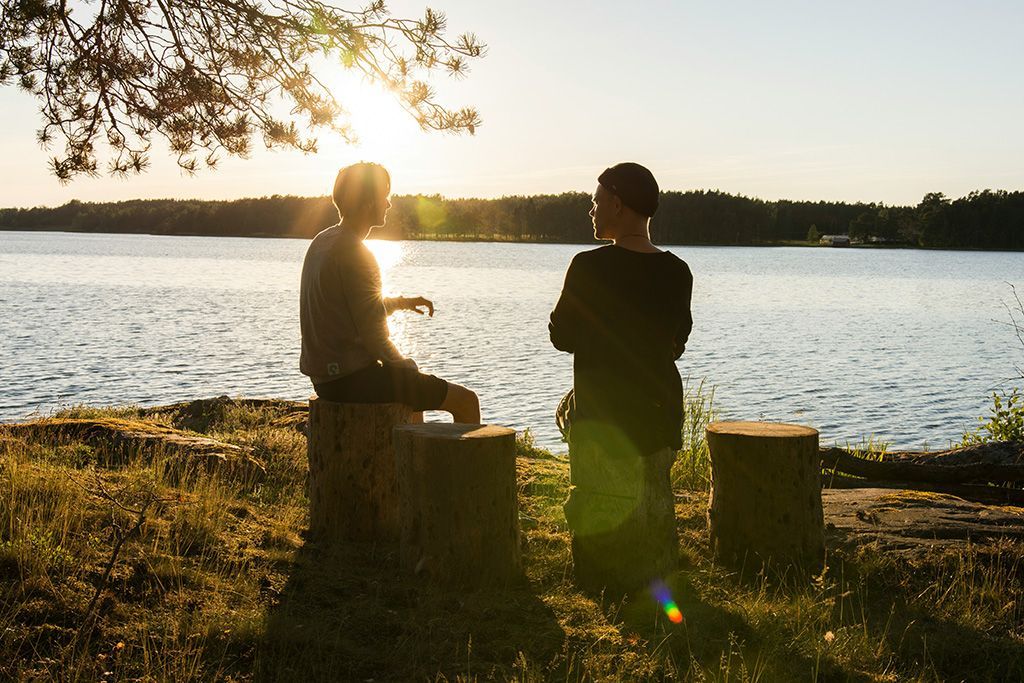
Last night, with a few family and friends, I watched Mary Oliver: Saved by the Beauty of the World, a documentary directed by Sasha Waters. It definitely has me thinking about how Mary paid attention, how she connected with the natural world, and how much we might notice if we took the time to be aware like she did.
This morning, as I get up and head out for a walk, I have an increased desire to pay attention. What follows is a mix of my reflections on the film and whatever catches my eye along the way. In the spirit of Mary Oliver, I want to notice and spend a little time with it.
. . .
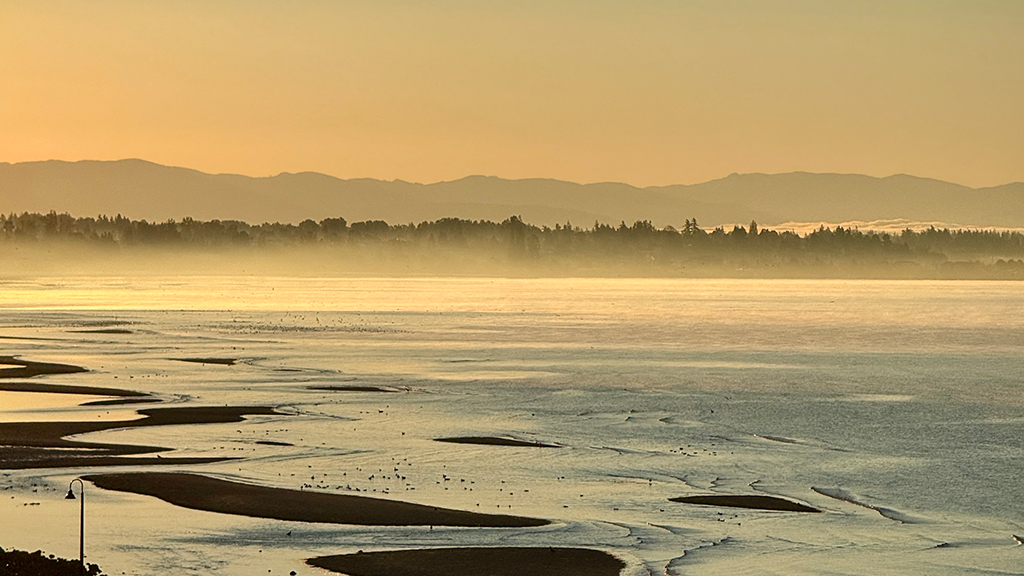
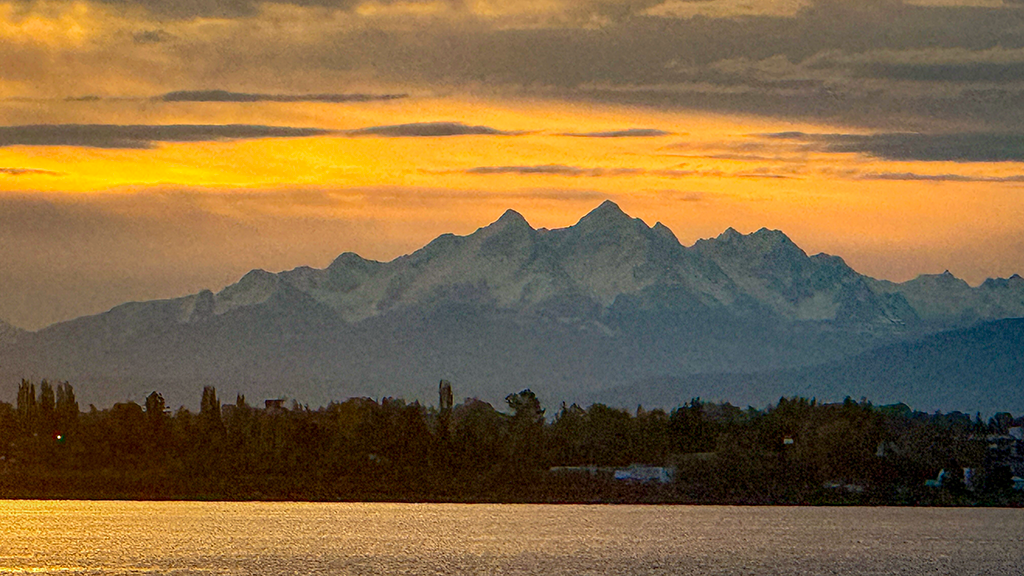
The light this morning is so beautiful. Soft pinks, whites, greys, and blues fill the sky. The ocean and the blue islands greet me as I walk out of my room and look through the window. I’m blessed to be in an apartment with an incredible view.
I love outdoor light. I’m so grateful I have eyes and can see. In nature, I love the way light filters through the trees, makes shadows on the ground, illuminates the leaves, and paints different shades of colour on the water. Of course, science has shown us that it’s not just our imaginations. Being exposed to natural light at different times of day is good for us.
When Mary Oliver said that beauty saved her, it really did. Later in life, she spoke publicly about the abuse she suffered as a child at the hands of her father. The beauty of nature was a balm for that pain.
I hadn’t really considered it until now, but maybe it’s a balm for my pain too. Beauty feels like such a gift. Not to avoid pain, but to learn from its wisdom, to transmute that pain, and to be healed by the acceptance we find in nature.
When I am among the trees,
especially the willows and the honey locust,
equally the beech, the oaks and the pines,
they give off such hints of gladness,
I would almost say that they save me, and daily…
~ Mary Oliver, “When I Am Among the Trees”
Furthermore, for Mary being “saved” wasn’t necessarily about escaping this world but about discovering how deeply we belong to it. Her poetry invites us to reconsider our separation from nature, one another, and the mystery of life itself.
Perhaps what we need saving from is the belief that we are alone, disconnected, or somehow outside the beauty and wonder of creation. Through her deep attention to the natural world, Mary discovered something that many contemplative traditions teach: we are part of something much larger than ourselves.
This is the awakening that many contemplatives and meditators experience. The invitation, therefore, is to awaken to reality, to recognize our belonging, and to experience the sacred in the ordinary moments of our lives.
Oliver’s life wasn’t without suffering, loneliness, or struggle. Beauty didn’t magically erase those experiences or protect her from difficulties. Instead, beauty offered her a way to stay connected to life even in the midst of those experiences. A walk in the woods, birdsong, or the simple act of paying attention was an opening to something deeper. Perhaps this is what Oliver meant by being saved. Not that everything becomes better or that our struggles disappear, but that we discover, sometimes in the smallest and most unexpected moments, that life is still beautiful, that we belong here, and that life is better when we allow ourselves to be caught up in awe and wonder.
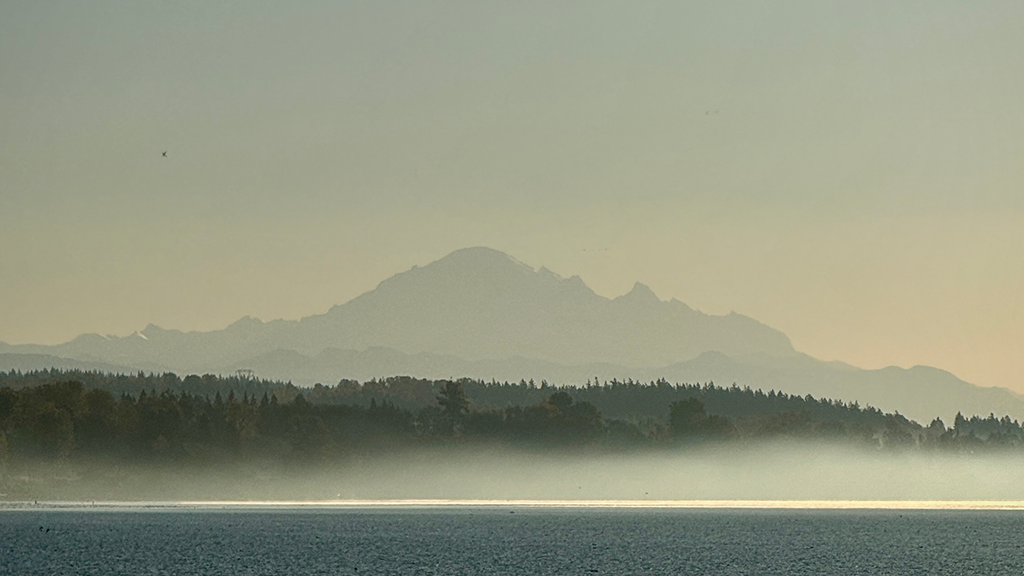
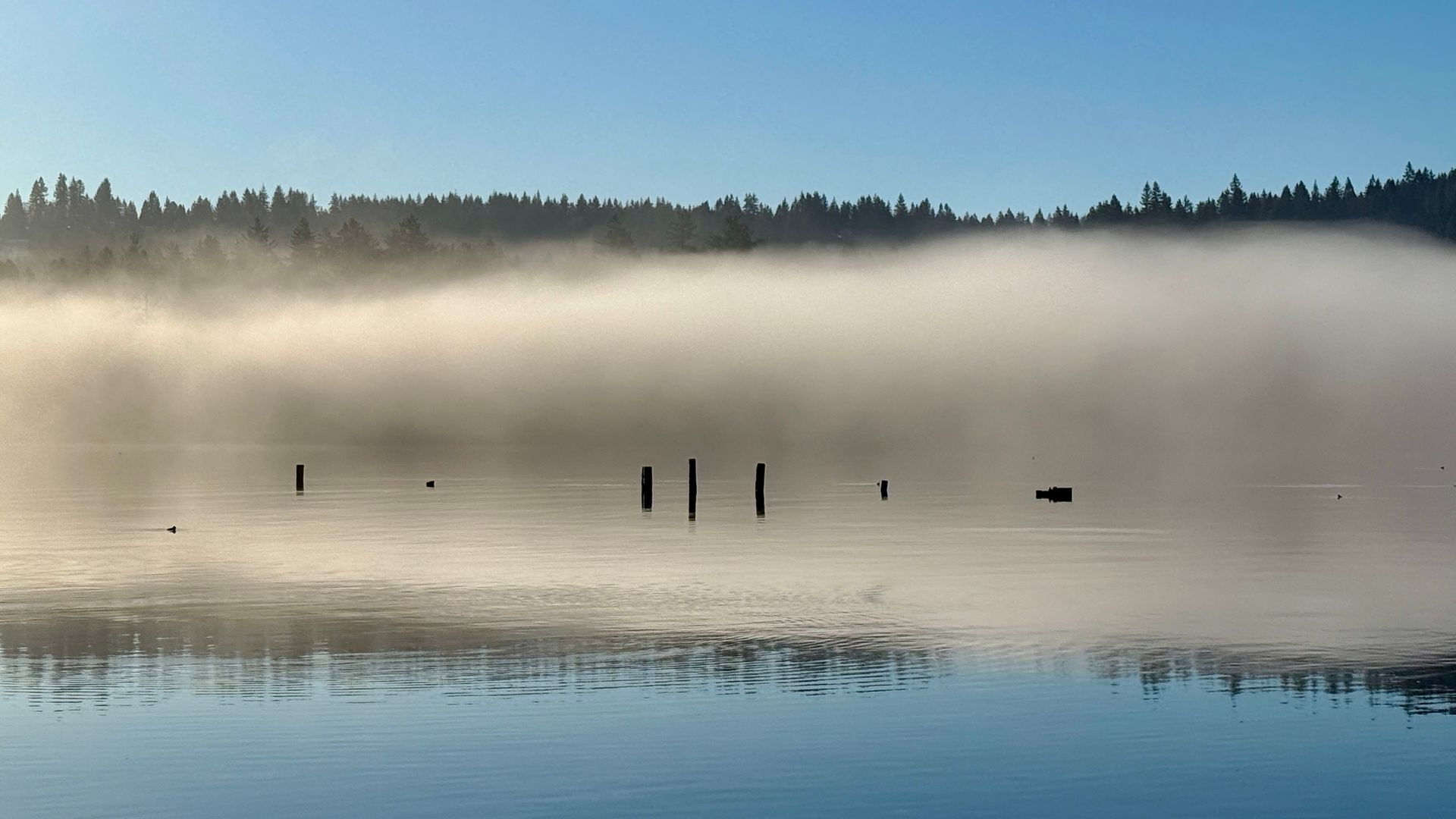
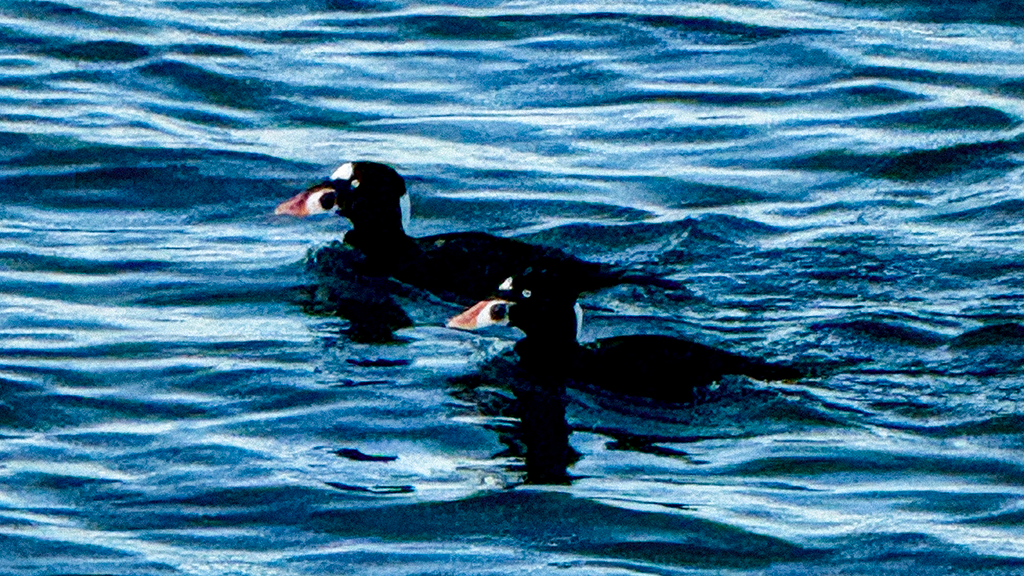
The sun rose just 30 minutes ago and is illuminating the mist on the surface of the water. At leat 100 ducks and geese move around the bay, individually and collectively, in seemingly haphazard patterns.
The leaves on the trees along this part of the trail are golden. It seems like it’s taken a long time to get to this point this year. Maybe it’s just my impatience, which they do not share. It’s my first year walking this path and getting to know what nature’s response to the seasons looks like here. I’m sure I’ll get to know it better over the years if we stay here. That’s something I’m excited to experience and learn!
. . .
Mary Oliver was a mystic. Mystics spend a lot of time with the mystery of things. They stay with it. She had an incredible gift for describing Mystery and putting into words what can be felt and experienced but is often difficult to express.
Someone in the film described reading her poetry and finding themselves agreeing with each line. That’s what poetry can do sometimes. The poet expresses something we recognize in our experience, and we can’t help but say yes to that.
. . .
I’m walking on the pier now, and I’m less sheltered than I was on the shore. The cool wind hits my face and bare hands. The sun is brightly reflected on the water. Instead of looking at the birds and wildlife from a distance, the pier allows us to be right up next to them.
There’s a Canadian flag waving in the wind, illuminated by the sun, at the end of the pier. Across the bay is the United States. I feel like the flag is simply saying, “This is Canada.” I have to admit, I’m really happy to be on the northern side of the flag these days.
Quietly and reflexively walking back toward the shore on the pier—there it is—an invitation…
The wisdom that sometimes arises on these walks.
I’m hearing, “Attend to the mystery.”
Pay attention. Be with it. Share it for the sake of encouragement. Help others see the beauty. Encourage them to go outside, notice, and connect. Maybe others will be saved too. Is Mary speaking to me? And just now as I write this, I remember that she said, “Pay attention. Be astonished. Tell about it.”
. . .
I’m particularly interested in Mary’s mystical side. What might we discover about ourselves, each other, and the world if we learned to pay attention the way she did?
There’s a scene in the film where Mary is walking with Maria Shriver, and Maria notices a spider above the trail. I get the sense that it’s something Maria would normally walk past. She asks Mary whether the spider is okay, whether it’s alive. Mary knows enough from her time in nature to recognize that it is okay. She even notices a little movement.
I think that’s part of being willing to take time to notice. What might we be walking past? What might be giving life to us, or simply be present in our lives, that we’re not noticing?
Nothing lasts forever.
Earlier in the film, Mary talks about walking the same path over and over, noticing things she may have missed the day before.
I think this speaks to the flow of life. No two days are the same. There’s a different painting in the same sky each day. Mystery and Nature are experienced personally. We see objects, but even those objects are in a state of change. Our lives are in flow too. We change each day, even at the molecular level.
I often think life is more like a river than a house. Rather than putting all our time, effort, money, and energy into building something fixed like a house, perhaps we can go with the flow like a kayaker on a river and respond to life as it arises and carries us through the passage of time. This approach takes trust. Part of the practice and living this way is being with the mystery and noticing it, as Mary did.
I’m learning that paying attention also means noticing impermanence. The light shifts while I’m watching it. Leaves turn golden and eventually fall and then return again in the spring. The birds gather, then move on. I can walk the same path every day, and it’s never the same as the day before.
Mary Oliver’s poetry invites me to consider this through ordinary encounters. Perhaps part of what makes them beautiful is that they won’t last. I can’t hold the morning light in place, but I can be here for it.
I find that both comforting and difficult. There are aspects of my life that I don’t want to change. Yet noticing change in nature encourages me to consider the changes in my own life.
What might happen if I spent less time clinging to situations, people, and things and more time appreciating what is here while it’s here?
Noticing is something we can practice.
Oliver developed her attentiveness through years of walking, observing, and writing. It isn’t necessarily an extraordinary gift available only to poets, but from my limited knowledge of poetry, it’s a key to the practice.
Remember, at one point, Mary was a beginner at noticing and writing poetry. I think we sometimes get frustrated with being beginners. We want to be experts right away, but life is full of new beginnings. Every day is a new beginning!
If Mary Oliver’s life and her ability to notice things call to you, this is something you can begin practicing. You will get better at it (noticing, not necessarily poetry—at least that’s been my experience) over time.
I think the universe wants to collaborate with us when it comes to noticing, so I’m quite confident that as you practice noticing and being deeply aware, one day, sooner or later, the forest, the pond, the trail, the sky, or maybe all of them at the same time will come alive and speak life-giving wisdom to you too.
And I think Mary would want us to share what we see. We might share through pictures, conversations, poetry, or some other medium, but again, don’t compare. Be willing to do it poorly, so to speak. Really, though, there is no “poorly.” They are your thoughts and your insights. Whatever you see or share is a gift to the rest of us, whatever the medium or your level of skill.
The Summer Day
Who made the world?
Who made the swan, and the black bear?
Who made the grasshopper?
This grasshopper, I mean—
the one who has flung herself out of the grass,
the one who is eating sugar out of my hand,
who is moving her jaws back and forth instead of up and down—
who is gazing around with her enormous and complicated eyes.
Now she lifts her pale forearms and thoroughly washes her face.
Now she snaps her wings open, and floats away.
I don’t know exactly what a prayer is.
I do know how to pay attention, how to fall down
into the grass, how to kneel down in the grass,
how to be idle and blessed, how to stroll through the fields,
which is what I have been doing all day.
Tell me, what else should I have done?
Doesn’t everything die at last, and too soon?
Tell me, what is it you plan to do
with your one wild and precious life?
~ Mary Oliver
Mary showed us that a grasshopper, a bird, a pond, or a blade of grass can become an invitation to be curious. Not everything has to be spectacular, and yet, when you get down to it, really get down to it with your nose in the dirt even, perhaps it is.
We see this with Mary. She invites us to look the way she looked, to spend time with the ordinary, and to grow in appreciation, wonder, and awe.
I think her approach goes beyond saving ourselves, as important as that is. I think it could help save the planet.
In the film, some people describe a perception that Mary’s poems weren’t very sophisticated because they were observations about nature and simple things. On the surface she was describing simple things, but with great profundity. There seemed to be an assumption that being a city dweller dealing with city problems was somehow more sophisticated.
I think Mary was saying, perhaps even shouting, “Don’t miss this. We all need this.”
I wonder if our sophistication sometimes causes us to deny our true nature. We’re natural beings, and we forget this, which harms both ourselves and the planet.
Many of us, myself included, struggle with knowing who we are. But spending time in nature can help us connect with ourselves. You begin to realize that you are part of it. You are nature. We’re not separate from this earth, from each other, from the animals, the sun, the water, the air, or the ground beneath our feet.
Jesse Elder, a coach I follow online, says, “That which we appreciate appreciates.”
(I met him once in a sushi bar and recorded a podcast with him as we ate after he spoke in Seattle, but that’s another story…)
In other words, if we appreciate the natural world, that appreciation grows in us and influences how we treat it. Some people express this by becoming activists. Others grow flowers, tend gardens, or pick up litter along the trail.
And let’s not forget that when Mary Oliver invites us to consider one of her most famous questions:
“Tell me, what is it you plan to do
with your one wild and precious life?”
She was not someone who spent her life chasing wealth, recognition, or fame. For much of her life, she lived modestly, walking in the woods and fields near her Provincetown home, paying attention to birds, foxes, grasshoppers, and the countless other small wonders.
So what did Mary choose to do with her one wild and precious life? She paid attention. She noticed. She delighted in the ordinary beauty of the world and shared what she discovered through her poetry. Perhaps that's part of what makes her question so profound. A wild and precious life doesn't necessarily have to be filled with extraordinary accomplishments. Maybe it's enough to be fully present to the life we've been given.
I’ll give an opinion here. Global warming or no global warming, it makes sense to take care of the planet. Why wouldn’t we want to be kind to it?
Our lack of kindness reveals our tendency toward violence, aggression, and greed. We don’t need to settle a scientific or political debate to see the value of caring for the earth.
Just be kind to the fucking planet! Doesn’t it make sense? Isn’t it common sense?
That’s something I appreciate about Indigenous perspectives that emphasize our relationship with the earth. Exploitation just doesn’t make sense when we understand that we are part of nature. When we harm the earth, we harm ourselves, each other, and future generations.
I’ll step down from my soapbox now.
Mary showed us a way.
Not so many months ago, I realized something I probably could have recognized sooner. Walking every day and being in nature, often on the same trail like Mary did, is my spiritual practice.
I do other things, of course, like spiritual reading and meditating indoors. But my daily spiritual practice is walking without an agenda and doing my best to be present and notice my surroundings. It seems so simple, and it is. Yet, as Mary showed us, it can be incredibly profound at the same time.
Being in nature, taking time to stop, notice, and simply be, helps us connect with a deeper part of ourselves. Some might call it divine. Whatever we call it (it doesn’t need to be named, only observed), there is a sense of something more, and that something more can save us.
It’s a mystery. Be with it.
It’s beautiful. Receive it.
You’re beautiful. You really are.
Let your light shine.
. . .
Photos by Rod Janz